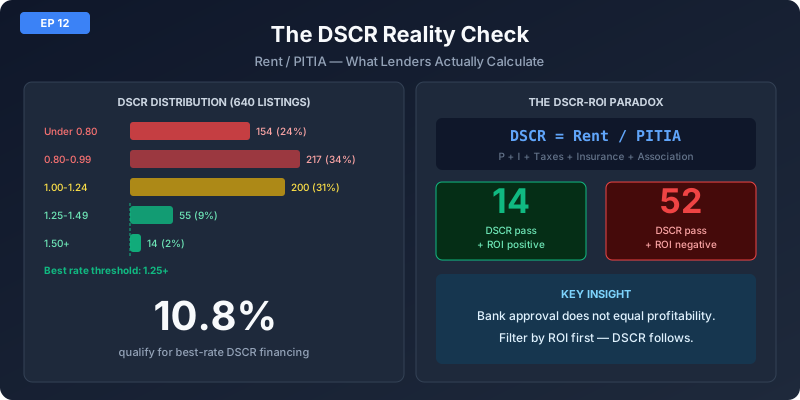
The DSCR Reality Check: Only 10.8% of Listings Qualify for Best-Rate Financing
The bank says yes. The property has a DSCR of 1.64 — rent covers the full housing payment by a comfortable margin. No W-2 needed. Close in three weeks. You buy it. Six months later you're writing a check for $193 every month just to keep it.
That's not a hypothetical. It's MRD12683954 in Palatine — a $159K 2-bedroom that passes the lender's DSCR test at 1.64 but delivers -8.16% ROI and negative cash flow every single month.
DSCR — Debt Service Coverage Ratio — measures whether a property's rental income covers its full housing payment (Principal + Interest + Taxes + Insurance + Association dues). Lenders use it to qualify investors without W-2s or tax returns. But as our data across 640 listings in 14 north suburbs shows, passing the bank's test and making money are two very different things.
The Formula Most Investors Get Wrong
Search "DSCR formula" online and you'll find dozens of posts saying:
The formula actual lenders use — Visio Lending, Griffin Funding, Kiavi, and others — includes the full housing payment:
A Worked Example
PITIA breakdown:
Principal + Interest: $1,200/mo (on $240K loan at 7.5%)
Property Taxes: $500/mo ($6,000/year)
Insurance: $135/mo ($1,620/year)
HOA: $200/mo
Total PITIA: $2,035/mo
DSCR = $2,350 ÷ $2,035 = 1.15
Now watch what happens with the wrong formula:
✓ Correct: $2,350 ÷ $2,035 (PITIA) = 1.15
Current DSCR Loan Landscape (2026)
| Parameter | Requirement |
|---|---|
| Income verification | None — property income only |
| Minimum DSCR | 1.0 (some lenders accept 0.75) |
| Best rate threshold | DSCR 1.25+ |
| Credit score | 620-680+ (700+ for best rates) |
| Down payment | 20-25% |
| Rates (starting) | From 6.12% |
| Closing timeline | 15-30 days |
| Top lenders | Kiavi, Griffin Funding, Angel Oak, Visio Lending, Lima One Capital, RCN Capital, Easy Street Capital |
The 10.8% Reality
We calculated the correct DSCR (Rent ÷ PITIA) for all 640 active rentable listings across 14 north suburbs:
| DSCR Range | Typical Rate Impact | Listings | % of Market |
|---|---|---|---|
| Under 0.80 | Most lenders decline | 154 | 24.1% |
| 0.80 – 0.99 | +0.50 – 1.00% above base | 217 | 33.9% |
| 1.00 – 1.24 | +0.25 – 0.50% above base | 200 | 31.3% |
| 1.25 – 1.49 | Base rate (best pricing) | 55 | 8.6% |
| 1.50 – 1.99 | Base rate or better | 12 | 1.9% |
| 2.00+ | Premium terms possible | 2 | 0.3% |
58% of listings sit below 1.0 — rent doesn't even cover the full PITIA for the majority of properties. Only 10.8% (69 listings) reach the 1.25 "best rate" threshold. Compare this to the wrong formula (Rent ÷ P&I only), which would show 61% above 1.25 — a 6x overestimate.
The DSCR-ROI Gap: Why 52 Approved Listings Still Lose Money
Here's the paradox: a property can pass the lender's DSCR test at 1.25 and still show negative ROI. The answer is two costs DSCR ignores: maintenance reserves (5% of gross rent) and the 8% vacancy factor (see our Episode 11 vacancy analysis). DSCR-PITIA only asks "does rent cover the housing payment?" It says nothing about the ongoing costs of actually operating a rental.
When PITIA consumes 80% of rent (DSCR 1.25), that remaining 20% looks healthy — until you subtract 5% for maintenance and 8% for vacancy. The surplus evaporates.
| Category | Listings | Meaning |
|---|---|---|
| DSCR ≥ 1.25 AND ROI > 0% | 14 | Bank says yes, you make money. |
| DSCR ≥ 1.25 AND ROI ≤ 0% | 52 | Bank approves, you still lose money. |
| DSCR 1.0–1.24 AND ROI > 0% | 16 | Profitable but qualifies at higher rate only. |
| DSCR < 1.0 AND ROI > 0% | 0 | Never happens — positive ROI always implies DSCR ≥ 1.0. |
That last row is the critical insight confirmed again from our Episode 9 stress testing: if a property is genuinely profitable (positive ROI), it will always have DSCR ≥ 1.0. The ROI test is the stricter filter.
But ROI also subtracts: 5% maintenance reserve + 8% vacancy factor.
Result: A property needs roughly DSCR 1.35-1.40+ before the math reliably produces positive ROI in our market.
DSCR by City: Most Suburbs Average Under 1.0
Using the correct PITIA formula, only two suburbs average above 1.0:
| City | Avg DSCR |
|---|---|
| Des Plaines | 1.068 |
| Palatine | 1.049 |
| Schaumburg | 0.992 |
| Morton Grove | 0.979 |
| Elk Grove Village | 0.973 |
| Mount Prospect | 0.957 |
| Buffalo Grove | 0.950 |
| Arlington Heights | 0.936 |
| Evanston | 0.935 |
| Glenview | 0.913 |
| Niles | 0.860 |
| Wilmette | 0.752 |
| Park Ridge | 0.732 |
The cities that led in our Episode 6 rent-to-price analysis — Des Plaines and Palatine — also lead here. Lower purchase prices keep P&I manageable, and relatively lower tax rates keep the full PITIA in check. But "best in class" at 1.068 is still well below the 1.25 best-rate threshold.
The Dual-Filter Winners: Best-Rate DSCR + Positive ROI
These rare properties satisfy both tests: the lender approves at best rate (DSCR ≥ 1.25) AND the investment produces positive returns after all costs including maintenance and vacancy.
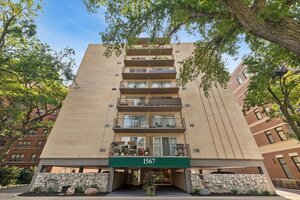
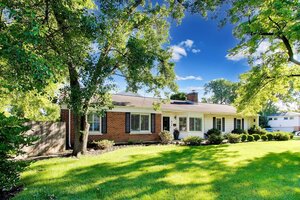
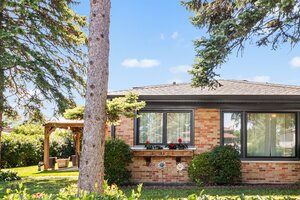
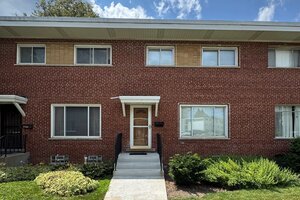
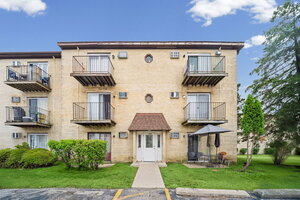
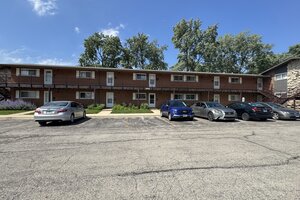
The pattern: highest-ROI dual-filter winners tend to be multi-bedroom properties. Larger units command higher rents while PITIA doesn't scale proportionally.
The Trap: DSCR-Pass, ROI-Negative
These listings would get you approved at the best rate. You'd still lose money every month.
Improving Your DSCR
If you find a property with strong ROI but marginal DSCR (say, 1.10 when you want 1.25 for the best rate), here are the practical levers:
When DSCR Matters Most: Scaling Past Conventional Limits
| Props 1-4 | Conventional loans. Better rates (6.5-7%). Require W-2s and tax returns. Straightforward. |
| Props 5-10 | Conventional gets painful. Fannie Mae requires 6 months reserves on every existing mortgage. DTI punishes you for owning rentals — even profitable ones count as debt. |
| Props 11+ | Conventional is closed. Fannie caps at 10 financed properties. DSCR loans are your only path — no property limit, no income docs, no DTI. Each property qualifies independently on its own rent. |
The lenders that specialize in DSCR portfolio lending — Kiavi, Griffin Funding, Angel Oak, Visio Lending, Lima One Capital, RCN Capital, Easy Street Capital — underwrite solely on the asset. Close in 15-30 days. No coordination with your CPA. No explaining K-1 income.
For the portfolio investor buying 2-3 properties per year, even the rate premium at DSCR 1.0-1.24 is acceptable if the deal works at the higher number. The question shifts from "best ROI in the market" to "positive ROI AND independently financeable at an acceptable rate."
The Dual-Filter Strategy on Panda Nook
The only remaining question is whether the property hits 1.25 for the best rate tier. That's a rate-shopping decision, not a deal-selection decision.
For the 16 listings in the "DSCR 1.0-1.24 but ROI positive" bucket: these are still good deals. You'll pay 0.25-0.50% more in rate — but the property still produces positive returns. Don't reject a profitable investment because it falls 0.05 points short of the best-rate threshold.
The Bottom Line
DSCR is the metric that unlocks financing without W-2s — but the bar is higher than most investors think. Using the correct lender formula (Rent ÷ PITIA), only 10.8% of active listings in Chicago's north suburbs hit the 1.25 "best rate" threshold. Most suburbs average under 1.0. And even among the 69 that pass, 52 still have negative ROI because DSCR doesn't account for maintenance reserves or vacancy.
The smart play: filter for ROI first (which always implies DSCR ≥ 1.0), then verify the specific DSCR tier for rate shopping. Don't start with DSCR as your deal filter — you'll approve yourself into losses.
Need help interpreting the numbers for a specific property? Reach out here — we're investors too, and we don't do sales pitches.
Data: 640 active rentable listings across 14 north suburbs as of July 2026. DSCR = Monthly Rent ÷ PITIA (25% down, 7.5% rate, 30-year term). Insurance estimated at 0.5% of purchase price. ROI includes 5% maintenance reserve and 8% vacancy factor that DSCR does not. Lender calculations may vary — always confirm with your specific lender. See Episode 5 for full ROI methodology.