The 1% Rule Is Dead: Zero Out of 622 Listings Pass It — But 35 Still Profit
Zero.
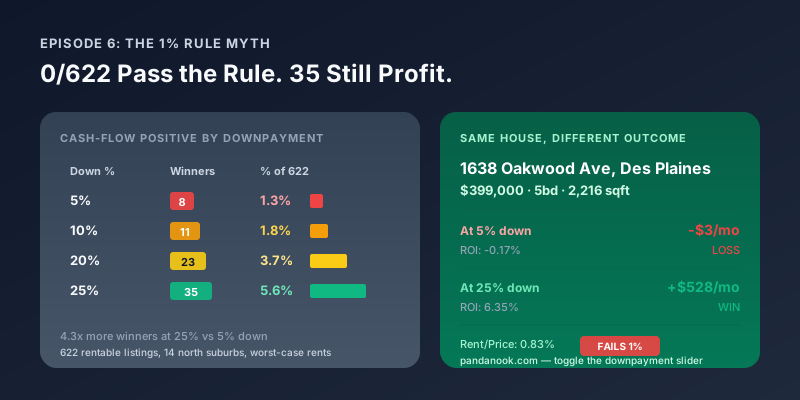
Out of 622 rentable listings currently for sale across Chicago's north suburbs, exactly zero pass the 1% Rule using worst-case rent estimates.
Not one in Arlington Heights. Not one in Palatine. Not one in Des Plaines, Schaumburg, Mount Prospect, Glenview, Park Ridge — nowhere.
If you're still using this rule to filter deals, you're not being conservative. You're being invisible. The 1% Rule doesn't narrow your search — it eliminates the entire market.
And yet: 35 of those same listings produce positive cash flow right now. The rule of thumb says "no." The actual math says "yes."
The difference? One variable the 1% Rule completely ignores.
The Rule That YouTube Won't Let Die
The 1% Rule is beautifully simple: if the monthly rent equals or exceeds 1% of the purchase price, it's a deal worth analyzing. A $300,000 house needs $3,000/month in rent. A $200,000 condo needs $2,000.
It worked in 2012. Mortgage rates were 3.5%. Obama was president. Instagram had just launched. The median home price in the north suburbs was 40% lower than today.
In 2026, it's a dead filter walking.
Here's the math that kills it: the best suburb in our 14-city sample (Des Plaines) averages a 0.64% rent-to-price ratio. That's 36% below the 1% threshold. The most expensive suburbs are even worse:
| Suburb | Avg Price | Avg Min Rent | Rent-to-Price | Positive CF Listings |
|---|---|---|---|---|
| Des Plaines | $411K | $2,513 | 0.64% | 11 |
| Palatine | $440K | $2,324 | 0.63% | 4 |
| Elk Grove Village | $401K | $2,347 | 0.60% | 0 |
| Schaumburg | $459K | $2,466 | 0.60% | 5 |
| Mount Prospect | $492K | $2,553 | 0.57% | 4 |
| Arlington Heights | $588K | $2,461 | 0.51% | 2 |
| Evanston | $665K | $2,462 | 0.50% | 1 |
| Glenview | $1.05M | $3,315 | 0.43% | 2 |
| Park Ridge | $997K | $2,944 | 0.40% | 1 |
| Wilmette | $1.14M | $3,576 | 0.39% | 1 |
The entire north-suburbs market sits at 0.39-0.64%. The 1% Rule would tell you to skip every single listing and move to Cleveland.
But look at the last column. Des Plaines has 11 profitable listings. Schaumburg has 5. These properties are making money — the 1% Rule just can't see them.
Why the Rule Fails (Three Things It Ignores)
The 1% Rule was invented when three variables were wildly different:
1. Interest rates. In 2012, a 30-year fixed was 3.5%. Today it's 6.8%. On a $400,000 property at 25% down, that rate difference adds $632/month to your mortgage payment. The 1% Rule treats all rate environments the same — catastrophic in a high-rate decade.
2. Property taxes. Cook County taxes average $8,000-12,000/year on a $400K property. That's $667-1,000/month before you've paid the mortgage. The 1% Rule ignores this entirely. A property in Texas with identical price and rent performs differently than one in Illinois because of tax load.
3. Leverage (downpayment). This is the one nobody talks about on YouTube. The same property produces completely different outcomes depending on how much cash you put in.
The first two are market forces you can't control. The third one? That's your decision. And it changes everything.
Same House. Different Down Payment. Opposite Outcomes.
Here's a real listing — 1638 Oakwood Avenue, Des Plaines. 5 beds, 2,216 sqft, listed at $399,000. Worst-case rent estimate: $3,300/month. Rent-to-price ratio: 0.83% (fails the 1% Rule decisively).
Watch what happens when you adjust the downpayment:
| Down Payment | Cash Invested | Monthly Mortgage | Monthly Cash Flow | ROI |
|---|---|---|---|---|
| 5% ($19,950) | $19,950 | $2,522 | -$3/mo ❌ | -0.17% |
| 10% ($39,900) | $39,900 | $2,389 | +$130/mo | 3.90% |
| 20% ($79,800) | $79,800 | $2,124 | +$395/mo | 5.94% |
| 25% ($99,750) | $99,750 | $1,991 | +$528/mo ✅ | 6.35% |
At 5% down, this property loses $3 per month. A strict investor would pass. At 25% down, it produces $528/month in cash flow — $6,336 per year on $99,750 invested. That's a 6.35% cash-on-cash return.
The 1% Rule sees 0.83% and says pass. The downpayment-adjusted model sees $528/month and says go. Same property. Same rent. Same market. Different conclusion — because one accounts for leverage and the other doesn't.
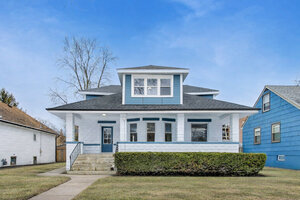
5bd / 2,216 sqft · Rent-to-price: 0.83% (fails 1% Rule)
ROI: 6.35% | Cash flow: +$528/mo at 25% down
The 1% Rule would have you skip a property that earns $6,336/year.
View Listing on Panda Nook →
The Downpayment Effect: 4.3× More Winners
This isn't one lucky listing. Across all 622 rentable properties in our sample:
| Downpayment | Cash-Flow Positive Listings | % of Market |
|---|---|---|
| 5% down | 8 | 1.3% |
| 10% down | 11 | 1.8% |
| 20% down | 23 | 3.7% |
| 25% down | 35 | 5.6% |
Going from 5% to 25% down produces 4.3× more profitable properties. That's not a marginal improvement — it's a market-size expansion. Eight listings become thirty-five.
Why? Because every additional dollar of downpayment reduces your monthly mortgage payment, which flows straight through to cash flow. At 25% down on a $400K property, you're financing $300K instead of $380K. That difference is roughly $530/month less in mortgage costs — often the entire margin between positive and negative.
The 1% Rule can't model this. It treats a 5%-down buyer and a 25%-down buyer identically. They're not.
The 29 Hidden Winners
Here's the stat that buries the 1% Rule for good: 29 listings that fail the 1% rule still produce positive cash flow at 25% down.
The 1% Rule would have you skip every single one. Here are the best:
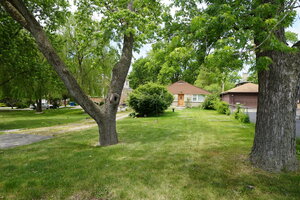
3bd / 1,064 sqft · Rent-to-price: 0.92% (fails 1% Rule)
ROI: 10.52% | Cash flow: +$713/mo at 25% down
Double-digit return on a property the 1% Rule rejects. At 5% down, ROI is still positive (20.68%) — this one wins at any leverage level.
View Listing on Panda Nook →
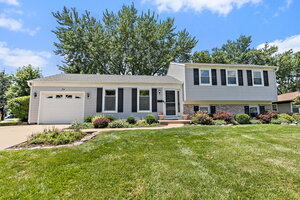
4bd / 1,500 sqft · Rent-to-price: 0.73% (fails 1% Rule badly)
ROI: 5.19% | Cash flow: +$444/mo at 25% down
At 5% down: ROI -5.95%, CF -$102/mo (loss)
The downpayment slider is the difference between a loss and a $5,328/year return.
View Listing on Panda Nook →
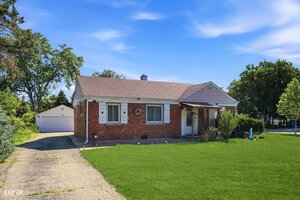
4bd / 1,318 sqft · Rent-to-price: 0.84% (fails 1% Rule)
ROI: 4.66% | Cash flow: +$384/mo at 25% down
At 5% down: ROI -8.60%, CF -$141/mo (loss)
Another property where leverage determines the outcome entirely.
View Listing on Panda Nook →
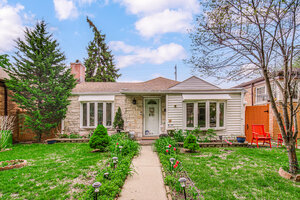
4bd / 1,329 sqft · Rent-to-price: 0.81% (fails 1% Rule)
ROI: 3.51% | Cash flow: +$315/mo at 25% down
At 5% down: ROI -14.34%, CF -$257/mo (loss)
Evanston is expensive. But the right leverage makes it work — $315/month positive in a town most investors write off.
View Listing on Panda Nook →
The Framework: Three Variables That Actually Matter
Forget rent-to-price ratios. Here's what determines whether a 2026 suburban rental makes money:
1. Your leverage level (downpayment). This is the single biggest knob you can turn. A $400K property at 5% down means $380K financed at 6.8% = $2,477/mo in P&I. At 25% down, it's $300K financed = $1,956/mo. That $521 difference is pure cash flow.
2. The tax-to-rent ratio. Property taxes in Cook County eat 25-40% of gross rent on average. If taxes are $10,000/year and rent is $2,500/month, you're losing $833/month to taxes — a third of your income. The properties that win tend to have taxes under 20% of annual gross rent.
3. The gross rent multiple. Not the 1% rule — the actual rent multiple after taxes and HOA. Properties where (rent - taxes/12 - HOA) still covers 60%+ of the mortgage payment are the ones with room to profit.
The 1% Rule collapses all three into a single ratio that tells you nothing about the actual return on your invested capital. It can't distinguish between a 5%-down buyer losing money and a 25%-down buyer earning 6%.
Try the Downpayment Selector Yourself
Every listing on Panda Nook has a performance section with a downpayment selector at the top. Toggle between 5%, 10%, 20%, and 25% and watch the numbers change in real time:
- ROI (your annual return on cash invested)
- Monthly cash flow (what hits your bank account after all expenses)
- Monthly mortgage payment (how leverage affects your fixed costs)
This is the replacement for the 1% Rule. Instead of a single pass/fail filter that eliminates your entire market, you get a dynamic model showing exactly where profitability begins for each property at your chosen leverage level.
Open any listing and slide the downpayment: Browse all listings →
Or go straight to the map view and filter for positive cash flow: Map View →
The Green-Light Checklist (Replace the 1% Rule With This)
Before making an offer on any north-suburbs rental in 2026:
- [ ] Cash flow positive at your actual downpayment — not at some hypothetical amount. Use 25% as baseline, check 20% if you want to preserve more cash.
- [ ] ROI above 4% at 25% down — anything below this, you're earning less than a high-yield savings account with far more risk.
- [ ] Tax-to-rent ratio under 30% — annual property tax / annual gross rent. Above 30% and the tax bill consumes too much margin.
- [ ] Rental eligibility confirmed — the building must show "Rentable" status. HOA restrictions can turn a profitable deal into an illegal one.
- [ ] Multiple rent comparables — if the rent estimate relies on one comp, it's fragile. Look for 3+ comparables in the performance data.
This checklist replaces a ten-year-old ratio with five questions that actually predict profitability in today's market.
The Hidden Danger: What Happens If You Keep Using It
Here's the worst part about clinging to the 1% Rule in 2026: it doesn't just make you miss deals — it pushes you toward dangerous ones.
If you insist on finding a 1% property in the north suburbs, you'll end up looking at listings priced under $200K with suspiciously high rent estimates. These tend to be one of three things:
- Condos with massive HOA fees that destroy the cash flow the moment you model them properly (we covered this in Episode 4)
- Properties in distressed condition where the low price reflects $50-80K in deferred maintenance
- Data anomalies — listings with incorrect pricing or rent comps that don't reflect reality
The handful of listings that technically hit the 1% rule with worst-case rents tend to be distressed properties where the "low price" hides a renovation bill that would push the true cost well past 1%. Chasing the rule sends you toward the edges of the market where deals look good on paper but fall apart in practice.
Meanwhile, the 35 properties making real money at 25% down are priced between $165K-$675K — normal, solid homes in established neighborhoods with verified rent comparables and confirmed rental eligibility.
Bottom Line
The 1% Rule was a useful shortcut when mortgages were 3.5% and homes were cheap. In 2026's north Chicago suburbs, it's a filter that rejects 100% of the market — including 35 properties that are actively making money right now.
The real question isn't "does rent hit 1% of price?" It's: "At my downpayment, does the cash-on-cash return justify the capital?"
That's a question a ratio can't answer. But a downpayment slider can.
Next Episode: *The Cost of Waiting** — what happens to ROI when you delay six months in a rising market, and why the best deals don't stay positive for long.*