Your Buy Box Is Too Vague — Here's What the Data Says to Put In It
You've been told to "define your buy box." Have you actually written one down?
Most investors haven't. They know the phrase — it's one of the most repeated pieces of advice on BiggerPockets and in every rental-investing book — but their real "buy box" lives as a vague feeling: "I'll know a good deal when I see it." That feeling is why they own one property and keep meaning to buy the second.
This post does two things. First, it teaches you what a buy box actually is and how to build one for Chicago's north suburbs — the concept, from the people who coined it. Second, using real numbers from 647 north-suburb listings, it tests a belief you probably hold: that there are plenty of deals out there if you just look. Spoiler: the data denies it. And that's exactly why the buy box matters.
What the Experts Mean by "Buy Box"
The term comes out of the BiggerPockets community, where "building your buy box" is step one of nearly every buying framework. The idea is simple: decide what a deal looks like before you start shopping, and write it down as concrete criteria.
Why does this help? Because it removes emotion and speeds decisions. When a listing lands, you're not asking "do I like this house?" — you're asking "does it fit the box?" A yes gets your full attention; a no gets skipped in seconds. BiggerPockets liked the idea enough to build a whole tool around it (BiggerDeals) that filters on-market properties by cash flow and cash-on-cash return.
A working buy box has three core parameters:
The experts are right that you need one. Where general advice stops is telling you what the numbers actually are in your market. Before we get to our data, let's build the box the way a seasoned investor would — one parameter at a time, with the reasoning behind each number.
The Math That Sets Your Price Ceiling
Most beginners set their price ceiling by budget ("I can afford up to $X"). Experienced investors set it by rent math, because that's what determines whether the property pays for itself. Here's the logic every buy box should be built on.
A rental has to cover its monthly carrying cost — what lenders call PITIA: Principal, Interest, Taxes, Insurance, and Association dues (HOA). If the rent doesn't clear PITIA plus a cushion for vacancy and repairs, the property bleeds cash every month regardless of how much you like it.
Push the price to $600K and PITIA jumps past $4,200/mo. No standard rental in these suburbs commands that in rent. The gap can't be closed by a nicer kitchen or a motivated tenant — it's structural. That's why the price ceiling, not your budget, is the real constraint.
This is the single most important thing a buy box encodes: a price above which the rent mathematically cannot win. In the north suburbs, that ceiling sits around $430K for most unit types — and it explains everything you're about to see in the data.
The Return Floor: Borrow the Experts' Screens
Your third parameter — the return floor — is where BiggerPockets' quick screens earn their keep. Before running a full analysis, investors filter with rules of thumb:
BiggerPockets built a free tool (BiggerDeals) that screens on-market listings by exactly these metrics, because the whole point of a buy box is to reject fast. A return floor turns "is this a good deal?" (slow, subjective) into "does it clear my number?" (instant). Our performance engine does the same computation on every north-suburb listing — which lets us test how many actually clear it.
Testing the Belief: "There Are Plenty of Deals Out There"
Here's the assumption a vague buy box rests on — that deals are common enough that you'll bump into one eventually. We tested it. Panda Nook analyzes every MLS listing in Illinois — tens of thousands of properties — and runs each through the performance engine. Filtering that firehose down to what's actually actionable for a north-suburb rental investor left 647 active, rentable listings across 14 suburbs as of September 19, 2026. (That count moves daily as listings come and go; the pattern below doesn't.) Here's how they scored at 25% down.
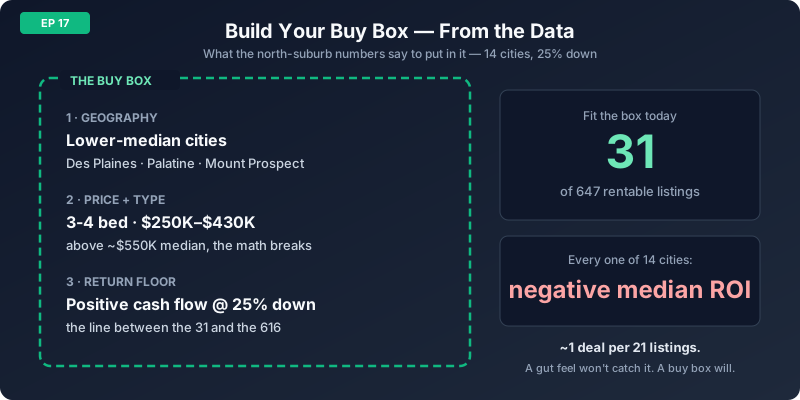
The belief is denied. Deals are not plentiful; they're rare. And it gets sharper: every one of the 14 suburbs has a negative median ROI at 25% down. The typical property in every single city loses money each month. The winners aren't the norm you'll stumble into — they're exceptions you have to deliberately filter for.
| City | Rentable Listings | Cash-Flow Positive | Median ROI | Avg Price |
|---|---|---|---|---|
| Des Plaines | 67 | 11 | -6.4% | $416K |
| Palatine | 70 | 7 | -9.5% | $488K |
| Mount Prospect | 34 | 4 | -7.9% | $537K |
| Skokie | 52 | 2 | -9.4% | $450K |
| Glenview | 43 | 2 | -10.2% | $895K |
| Elk Grove Village, Schaumburg, Buffalo Grove, Arlington Heights, Niles, Park Ridge |
— | 1 each | −7% to −16% | varies |
| Morton Grove, Evanston, Wilmette | — | 0 | −12.7% to −16.3% | high |
Now the buy box writes itself from the data. Geography: weight toward the lower-median cities — Des Plaines alone supplies 11 of the 31 deals, with Palatine and Mount Prospect next. Price + type: the winners cluster in 3-4 bedroom homes roughly $250K-$430K; above ~$550K median (Glenview, Park Ridge, Wilmette) the rent math collapses. Return floor: positive cash flow at 25% down — the line that separates the 31 from the 616.
That's a real buy box, built from what the market actually produces — not a hunch. The experts told you to build one; the Chicagoland numbers tell you exactly what to put in it.
Calibrating the Box: Too Tight vs. Too Loose
Here's the mistake that quietly kills investors' progress: setting the box wrong in either direction. With only 31 winners in 647 listings, calibration isn't a detail — it's the whole game.
The calibrated box sits in between, and the data draws the lines for you: floor at the real market edge (positive cash flow at 25% down — the line 31 listings clear), ceiling at the rent-math wall (~$430K), and geography wide enough to produce flow (all the cities that show at least one winner, not just Des Plaines). Set it there and you'll see roughly a handful of genuine candidates a month — few enough to actually evaluate, frequent enough to keep buying.
Now Apply It: Run Your Buy Box on Autopilot
A written buy box is only half the job. The other half is checking the market against it constantly — because the deals that fit are rare AND they don't wait. Doing that by hand means reviewing 647 listings, re-checking as prices change, and happening to look on the exact day a new one appears. Nobody sustains that.
This is where Panda Nook turns your buy box into a system. Enter the criteria once; the platform watches for you.
And the reason automation beats willpower here is timing. Here's how recently the 31 cash-flow-positive deals hit the market:
| How recently the 31 deals were listed | Count |
|---|---|
| In the last 7 days | 9 |
| In the last 14 days | 15 |
| In the last 30 days | 21 |
Two-thirds of today's profitable inventory arrived in the last month; nine of them just this week. Your buy box isn't checked once and filed — it needs to run against a stream that refreshes constantly. That's the job the portal and alarms do while you're at work.
The Buy/Wait Decision
Once your buy box is automated, your work is no longer finding — it's deciding. A match is not automatically a buy. Run each one through three gates:
When This Breaks
A buy box is powerful, but not magic. Three honest limits:
Too tight and it catches nothing. With only 31 winners in 647 listings, an overly strict box (say, 8%+ ROI in one city) may match zero for weeks. Set your floor at the real market line — positive cash flow — not an aspirational one.
Some weeks bring nothing. The stream is uneven. Twenty-one of the 31 deals arrived in the last 30 days, but not evenly. Patience is part of the system.
Discovery isn't financing. The buy box finds listings; it doesn't fund them. Buying #2 means a lender re-underwrites you, and how they count rental income is its own subject — Episode 12 (DSCR) covers it. Have the money lined up before a match appears.
Deals That Fit the Box Right Now
These three are live today, all cash-flow positive at 25% down, all with rent estimates grounded in real comps — the kind of match a north-suburb buy box would surface. Different price points and cities, to show the spread.
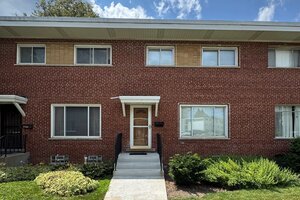
Days on market: 4 (fresh)
ROI: +10.94% | Cash flow: +$570/mo
The affordable end of the box. A 3-bed under $250K that cash-flows is rare — and at 4 days on market, exactly the kind of listing a manual searcher never sees in time. View listing →
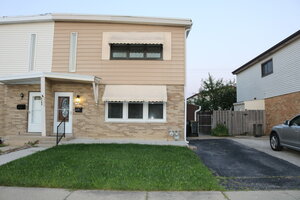
Days on market: 22
ROI: +7.40% | Cash flow: +$656/mo
From the city that supplies a third of the region's deals — right at the top of the box's price range, with the best monthly cash flow of the three. View listing →
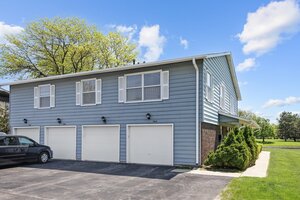
Days on market: 8
ROI: +4.05% | Cash flow: +$236/mo
The single positive deal in a city whose median ROI is negative — the exact exception a buy box catches and a city-wide glance would dismiss. View listing →
Log into pandanook.com, open the investor portal, and write your buy box for purchase #2 — the cities that performed, the price bracket that cash-flowed, the return floor you now trust. Turn on an alarm. Then stop hunting and let it run.
Next Episode: The Phantom Bedroom — how adding a legal bedroom to the right floor plan forces value the comps haven't priced in yet.