Your First Rental Should Be Boring. Here's Why.
Your first rental property shouldn't excite you. If you're scrolling listings thinking "I'd live there" or "that's a great deal," you're buying with the wrong filter.
The best starter rental is boring. It's a home that the right tenant will rent for years while you collect cash flow and let them pay off your mortgage. The data shows exactly what "right tenant" means — and it's not about bedroom count. It's about property type, tenant type, and the hidden math that most ROI calculators don't show you.
What Actually Drives Long Tenancy
The conventional wisdom says "buy a 3-bed." But the research tells a more nuanced story. The real driver of low turnover isn't bedroom count — it's property type and who it attracts.
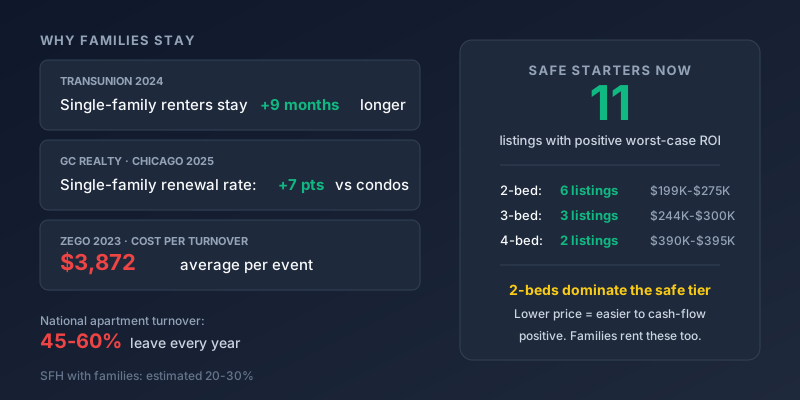
Nine months. That's the gap between single-family and apartment tenants — not because of the bedroom count, but because of who rents single-family homes: families.
Bigger households = families with children. Children in school = parents who don't want to move. That's the retention mechanism — not "3 bedrooms" specifically.
And this is confirmed locally in Chicago:
Three independent data sources. Same conclusion. Single-family homes attract families. Families stay. The property type drives the tenant type, and the tenant type drives retention.
The Real Rule: Buy What Families Rent
So what does a family actually need?
Harvard's Joint Center for Housing Studies defines family-sized housing as having "at least one bedroom for every two people in the household." That means:
- Family of 3 (couple + 1 child): 2 bedrooms is sufficient
- Family of 4 (couple + 2 children): 3 bedrooms minimum
- Family of 5+: 3-4 bedrooms
The takeaway: a 2-bedroom single-family home is a perfectly valid starter rental for a family with one child. You don't need to limit yourself to 3+ beds. What matters is:
- Single-family or townhome (not a large apartment building)
- Enough space for a family (2+ bedrooms)
- Near good schools (the lock-in mechanism)
- Positive worst-case ROI (the stress test from Episode 9)
Don't fall into the "must have 3 bedrooms" trap. A 2-bed SFH in a strong school district will attract a young family with one child — and that family will stay longer than a single professional in a luxury 3-bed condo. The property type creates the tenant profile. The tenant profile creates the retention.
The ROI Already Accounts for Vacancy — Turnover Is Extra
Here's something most investors miss when reading ROI numbers on Panda Nook: vacancy is already baked in. Every listing page shows "Gross Rental Income (92% occ.)" — that means we multiply rent by 0.92 before computing anything else. One month per year of vacancy is already accounted for in the worst-case ROI you see.
So when a listing shows +$184/month cash flow, that number already assumes the unit sits empty for roughly one month each year. The ROI is real. The vacancy buffer is real.
But here's what the formula cannot predict: turnover cost.
That $4,000 is not vacancy — vacancy is already handled by the 92% factor. That $4,000 is the additional cost of turning a unit: deep cleaning, paint touch-ups, carpet cleaning or replacement, minor repairs the outgoing tenant caused, re-listing on rental platforms, background checks and screening for new applicants, potentially a leasing agent commission.
Let's make this concrete. Take a property showing +$184/mo worst-case cash flow (that's the Des Plaines 3-bed currently listed). Annual cash flow: $184 x 12 = $2,208. One turnover costs $4,000. If your tenant leaves after one year, you're not up $2,208 — you're down $1,792 despite the ROI looking positive on paper.
The ROI formula assumes you have a paying tenant. It accounts for the time between tenants (vacancy). It cannot account for the cost of finding and preparing for the next tenant. That's on you — and the best defense is a tenant who simply doesn't leave.
The Rent Manager/Zego 2024 data shows the average resident retention rate is just 60%. Four out of ten tenants leave every year. If you're in that bucket with a low-margin property, the math doesn't work no matter what the ROI calculator says.
The 10-Year Math: Same Property, Two Tenant Types
Let's take a real listing and run two scenarios over a decade. This is MRD12675226 — a 2-bed in Arlington Heights listed at $199K, showing +$89/month worst-case cash flow.
Same property. Same ROI. Same neighborhood. The only variable: who rents it.
| Path A: Young Professional | Path B: Family Tenant | |
|---|---|---|
| Typical stay | 18 months | 4 years |
| Turnovers in 10 years | 7 turnovers | 2 turnovers |
| Turnover cost ($4,000 each) | $28,000 | $8,000 |
| 10-year gross cash flow ($89/mo) | $10,680 | $10,680 |
| Net after turnover costs | -$17,320 | +$2,680 |
The difference: $20,000 over 10 years. At $89/month, that's more than 18 months of total cash flow — wiped out entirely by who you rented to.
Path A shows a property that looks profitable on paper but bleeds money in practice. Path B shows the same property actually working as intended. The ROI is identical. The tenant type changes everything.
This is why "buy what families rent" isn't just a nice idea — it's the difference between a functioning investment and a slowly-draining liability dressed up as a positive-ROI property.
The School Lock-In Effect
Why do family tenants stay so long? It's not loyalty or laziness. It's a structural constraint: school enrollment.
Source: Redfin 2024 Renter Tenure Report
The mechanism is straightforward: changing schools is the number-one disruption families avoid. Once a child is enrolled — especially in a good district — parents will absorb rent increases, tolerate minor inconveniences, and ignore "better deals" elsewhere rather than pull their kid out mid-year.
And it's not just mid-year moves they avoid. Many parents won't move at all until a child finishes a school level. That's kindergarten through 5th grade (6 years), or 6th through 8th (3 years), or high school (4 years). A family that enrolls a kindergartner in your school district has a structural incentive to stay until that child is in middle school.
In the north suburbs specifically, this effect is amplified. School district quality varies block by block. Palatine Township's District 15 feeds into different high schools depending on address. Arlington Heights families paying attention to school boundaries know that moving two streets over could change their child's trajectory. Once they find a good district placement, they hold on.
This creates a powerful dynamic for landlords: you're not just renting a home — you're renting access to a school district. And families pay a premium in stability for that access. A 2-bed SFH near a strong elementary school doesn't just attract families — it traps them (in the best possible way for both parties). The tenant gets continuity. You get retention.
The math from the Redfin data confirms it: a third of renters stay 5+ years. Those aren't young professionals in studio apartments. Those are families locked into their children's school calendars.
What's Available Right Now
Panda Nook tracks every MLS listing in Illinois. For this analysis, we pulled data from 14 north suburbs. Here's the reality: 11 listings currently show positive worst-case ROI at 25% down with 2+ bedrooms under $400K. That's roughly 2% of the rentable inventory in this category.
| MLS | Location | Beds | Price | ROI | CF/mo | Days Listed |
|---|---|---|---|---|---|---|
| MRD12432884 | Mount Prospect | 3 | $250K | 10.94% | +$570 | 360 |
| MRD12699392 | Mount Prospect | 4 | $395K | 4.66% | +$384 | 21 |
| MRD12710231 | Evanston | 2 | $215K | 4.50% | +$202 | 9 |
| MRD12631088 | Palatine | 3 | $244K | 4.02% | +$205 | 85 |
| MRD12717247 | Arlington Heights | 2 | $230K | 3.96% | +$190 | 3 |
| MRD12708567 | Des Plaines | 4 | $390K | 3.15% | +$256 | 14 |
| MRD12716597 | Des Plaines | 3 | $300K | 2.94% | +$184 | 1 |
| MRD12719120 | Palatine | 2 | $220K | 2.16% | +$99 | 1 |
| MRD12675226 | Arlington Heights | 2 | $199K | 2.13% | +$89 | 49 |
| MRD12701566 | Schaumburg | 2 | $270K | 1.25% | +$71 | 21 |
| MRD12715070 | Schaumburg | 2 | $275K | 1.18% | +$68 | 6 |
Summary by bedroom count:
| Beds | Count | Price Range | Avg Worst ROI |
|---|---|---|---|
| 2 | 6 | $199K - $275K | +2.5% |
| 3 | 3 | $244K - $300K | +5.9% |
| 4 | 2 | $390K - $395K | +3.9% |
Notice: 2-bed listings dominate the safe tier. They're cheaper (lower mortgage = easier to cash-flow positive) and attract smaller families or couples planning to start one. Don't dismiss them.
The Current Safe-Tier Starter Rentals
Here are 6 standouts — a mix of 2-bed entry-level options and larger family homes:
Three and Four Bedroom Options
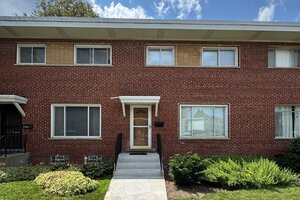
360 days on market - motivated seller territory
Worst-case: +$570/mo (10.94% ROI)
Top performer in the entire starter bracket. A year on market means negotiating power. At this cash flow level, even annual turnover is survivable — but with a family tenant, this property is a machine.
View MRD12432884 on Panda Nook

21 days on market
Worst-case: +$384/mo (4.66% ROI)
Four bedrooms = larger family = longest retention. The Harvard rule says this fits a family of 7-8. In practice, it attracts families with 2-3 kids who lock in for the entire school cycle.
View MRD12699392 on Panda Nook
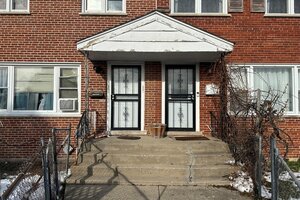
1 day on market - just listed
Worst-case: +$184/mo (2.94% ROI)
Brand new to market. This is the type that disappears within a week. Three beds in a family-friendly suburb at $300K with positive worst-case CF — the sweet spot for family retention.
View MRD12716597 on Panda Nook
Two Bedroom Options
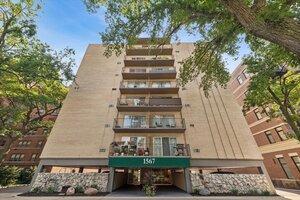
9 days on market
Worst-case: +$202/mo (4.50% ROI)
Best cash flow in the 2-bed category. Evanston has strong schools and walkable neighborhoods — exactly what young families with one child seek out.
View MRD12710231 on Panda Nook
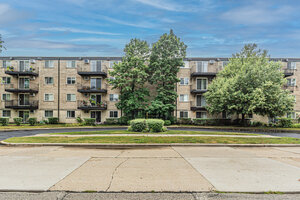
3 days on market
Worst-case: +$190/mo (3.96% ROI)
Fresh listing in one of the north suburbs' most family-oriented communities. Arlington Heights District 25 schools are a known draw for renters with young children.
View MRD12717247 on Panda Nook
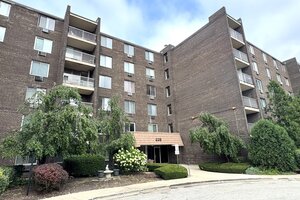
1 day on market
Worst-case: +$99/mo (2.16% ROI)
Just listed. 1,200 sqft is spacious for a 2-bed — gives it the feel of a larger home. Lower cash flow, but the sub-$225K price means minimal capital at risk.
View MRD12719120 on Panda Nook
The Investor Portal: Stop Scrolling, Start Matching
These 11 listings change every week. New ones appear, old ones go under contract. Checking manually every day means you'll miss them — especially when one lists and goes contingent within 6 days (Episode 8 showed 64% of winners vanish in a week).
The Matched Properties feature in the investor portal solves this:
Bedrooms: 2+
Cities: Des Plaines, Mount Prospect, Palatine, Arlington Heights, Schaumburg, Evanston
Min ROI: Positive worst case
Property type: Single Family / Townhome
Every time a new listing matches, it appears in your portal. No daily searching. No missed opportunities. You set the parameters based on what the research shows works — family-sized SFH in strong school districts with positive worst-case ROI — and the system does the filtering.
When something matches, you analyze it, run the stress test from Episode 9, and move — while other buyers are still discovering the listing exists.
The portal also shows you near-misses: properties that match on most criteria but fall just short on one. These are worth watching because a price reduction or updated rent comp could push them into positive territory within days.
The Checklist: What Makes a Good Starter Rental
Based on the research and the data:
2. 2+ bedrooms (enough for a family with at least one child)
3. Near schools with decent ratings (the lock-in mechanism)
4. Positive worst-case ROI at 25% down (survives the stress test)
5. Under $400K (realistic first-time investor budget)
6. In a suburb with strong rental demand (low vacancy)
7. Think about turnover: does the property attract tenants who stay 3+ years?
8. Run the 10-year math: cash flow minus likely turnover costs = real return
The ROI number on the listing page tells you the property works mechanically. The checklist above tells you whether it works practically — whether the cash flow will actually reach your bank account or get eaten by turnover every 18 months.
The Bottom Line
Forget "always buy 3-bed." The research is clear: single-family homes attract families, and families stay. A 2-bed SFH in Arlington Heights for $199K that cash-flows positive in worst case is a better starter rental than a 3-bed apartment condo for $350K with high turnover — because the ROI number means nothing if you're spending $4,000 every time a tenant leaves.
The formula on the listing page already accounts for vacancy. It does not account for the cost of finding and preparing for a new tenant. That cost is real ($4,000 per the 2025 Zego data), it's recurring (60% of tenants leave every year nationally), and it's the hidden expense that separates profitable landlords from frustrated ones.
Buy boring. Buy what families rent. Let the school calendar do your retention work for you.
Only 11 listings fit the criteria right now. They don't last long. The portal catches them the moment they appear.
Browse all listings on Panda Nook
Set up your investor portal - Register on Panda Nook
Next Episode: Buying a Tenant, Not a House — how the Similar Rentals section reveals who will actually live in your property.